

Deep brain stimulation (DBS) is a surgical procedure for Parkinson's disease that can help ease movement symptoms and, in some cases, reduce medication needs.
The Live On with DBS Education Hub powered by The Michael J. Fox Foundation provides information to help you learn how DBS works, who may benefit from this treatment, and what to expect before, during and after surgery.
-

Deep Brain Stimulation for Parkinson’s: Who, When and Why?
Advances in deep brain stimulation are helping personalize Parkinson’s treatment. Join our upcoming webinar to learn who may benefit, what DBS can and cannot do, and how the technology is evolving.
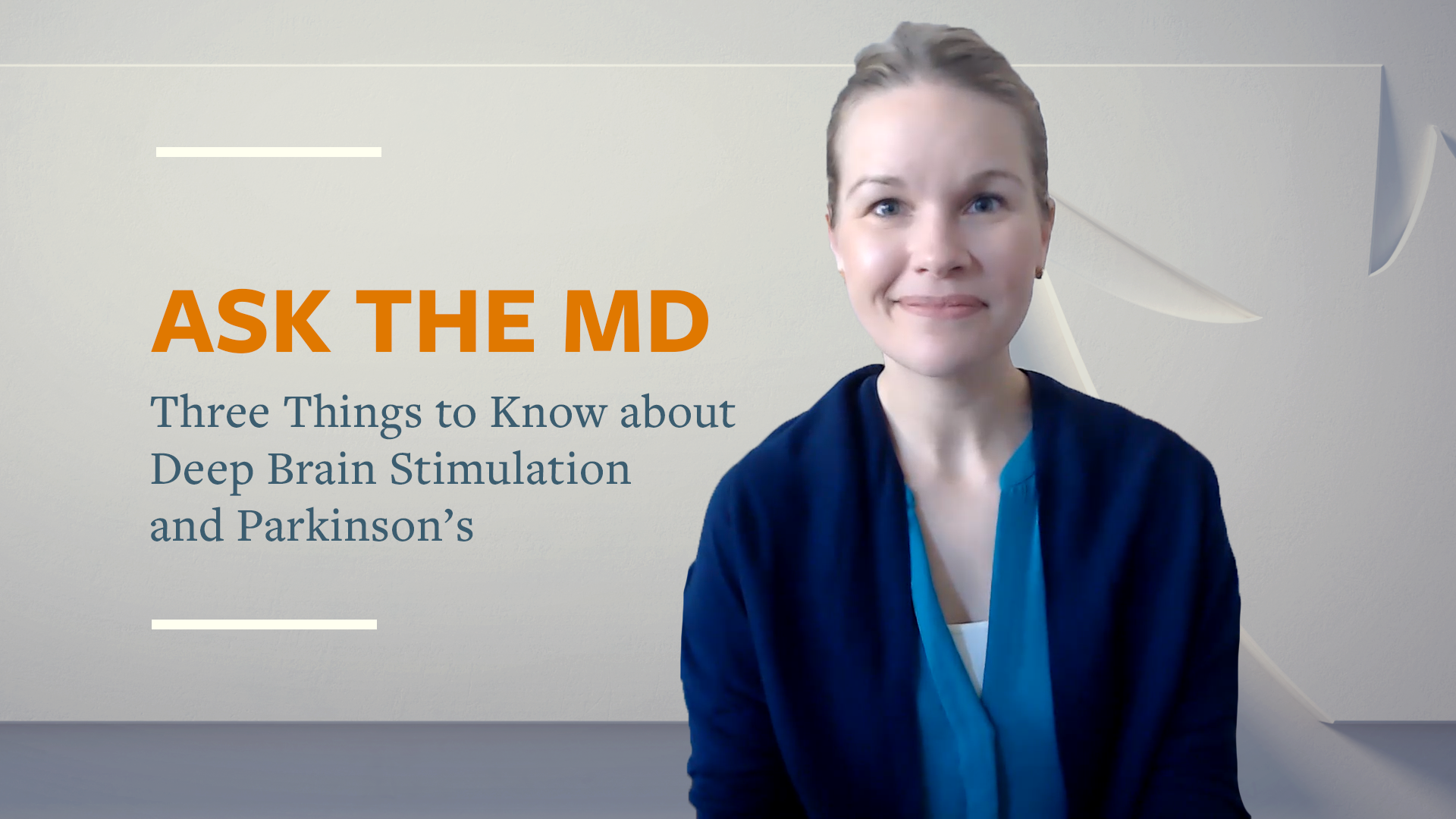
Could DBS Be Right for You?
Rachel Dolhun, MD, highlights three important things to know when considering DBS.
Common Questions about Deep Brain Stimulation
The decision to undergo DBS surgery is highly personal. Below are answers to common questions about the procedure and life after treatment. This information can help you start a conversation with your doctor and care team, who can help you determine whether DBS is right for you.
-
What Is Deep Brain Stimulation?
DBS is the most commonly performed surgical treatment for Parkinson’s disease. The procedure involves placing thin wires, called leads or electrodes, into areas of the brain that control movement. These wires connect to a battery-powered device that delivers electrical stimulation to help ease some Parkinson’s movement symptoms.
-
What Can DBS Do, and Not Do?
DBS does not slow the progression of Parkinson’s, and it is not a cure.
For many people, DBS is most likely to ease symptoms slowness, stiffness, tremor, dyskinesia (involuntary movements), dystonia (muscle cramping) and mild walking challenges that improve with levodopa. It may also allow some people to reduce their Parkinson’s medications.
DBS is not established to help with imbalance or freezing of gait. It also does not ease nonmotor symptoms including speech or swallowing difficulties, thinking or memory issues, mood changes such as depression and anxiety, or issues related to the bowel, bladder or sexual function.
-
Who May Be Eligible for DBS?
DBS is approved by the U.S. Food and Drug Administration for people who have had Parkinson’s disease for at least four years, benefit from medication and experience complications, such as significant “off” time (periods when symptoms return because medication is not working well) and/or dyskinesia. People whose tremor does not improve with medication may also benefit from DBS.
Doctors recommend DBS when it is most likely to offer benefits and least likely to cause side effects or complications. Discussing the procedure with your doctor early can help you understand whether it may be an appropriate option and, if so, when it may be most beneficial. DBS should not be viewed only as a last-resort treatment.
Because DBS is a surgical procedure, your overall health is an important consideration in determining whether it may be an option for you.
-
What Are the Risks of DBS?
As with any surgery, DBS carries potential risks, including bleeding, stroke, infection and complications related to the surgery. Some people may also experience side effects from stimulation, such as changes in speech, balance or mood. Programming adjustments can often improve these side effects.
Before deciding whether DBS is right for you, talk with your care team about the potential benefits and risks of the procedure and how they relate to your symptoms and treatment goals.
-
What Happens before DBS Surgery?
Before surgery, you undergo a detailed evaluation to determine whether DBS may be appropriate for you and your symptoms. A team of experts, including a movement disorder specialist (a neurologist with additional training in Parkinson’s) and a brain surgeon, conducts an extensive assessment.
If you decide to move forward with DBS, your care team will discuss the available device options and help you choose the one that best fits your symptoms and preferences.
-
What Happens during DBS Surgery?
During DBS surgery, your surgeon places thin wires, called leads or electrodes, into specific areas of the brain that control movement. Many people remain awake during surgery so they can answer questions and complete simple tests to help the surgeon confirm that the wires are placed correctly.
Some surgeons can also place the wires while a person is asleep, using brain imaging for guidance. Both awake and asleep DBS surgery options have advantages and disadvantages. Neither approach is suitable for everyone, and availability varies by location.
Once the wires are in place, the surgeon connects them to a battery-powered device, similar to a cardiac pacemaker, that is typically implanted under the skin below the collarbone. This device, called a neurostimulator, delivers electrical pulses through the wires to help ease symptoms.
-
What Happens after DBS Surgery?
A few weeks after surgery, a movement disorder clinician turns on and programs the neurostimulator to help manage your symptoms. Over time, your clinician gradually adjusts DBS settings and medications to find the combination that best manages your symptoms.
Some people can reduce — but not completely discontinue — their Parkinson’s medications after DBS. Finding the best combination of medication and DBS settings often takes six months or longer. After that, you meet regularly with your DBS programmer for check-ins and adjustments, as needed.
-
What Is Life Like after DBS?
The benefits of DBS for movement symptoms can last many years. However, because DBS does not stop Parkinson’s progression, the disease continues to advance over time.
As Parkinson’s progresses, new symptoms may develop and existing symptoms may worsen. If additional movement symptoms arise, treatment may include adjustments to DBS settings, medication changes or physical therapy.
Symptoms such as freezing of gait, balance difficulties, and memory or thinking changes, which may develop later in the disease, generally do not respond to DBS. As a result, DBS may eventually seem less effective for some people.
Before deciding whether DBS is right for you, discuss your goals with your care team, including what you hope to gain from surgery and what to expect in terms of symptom benefit and potential medication reduction.
The medical information contained in this article is for general information purposes only. The Michael J. Fox Foundation for Parkinson’s Research has a policy of refraining from advocating, endorsing or promoting any drug therapy, course of treatment, or specific company or institution. It is crucial that care and treatment decisions related to Parkinson’s disease and any other medical condition be made in consultation with a physician or other qualified medical professional.
Sponsorship Acknowledgment

This content was made possible by Medtronic. Partner support allows us to furnish high-quality educational materials to the Parkinson’s community while maintaining our commitment to allocate donor dollars to high-impact research. The Michael J. Fox Foundation for Parkinson’s Research is solely responsible for this content.


